
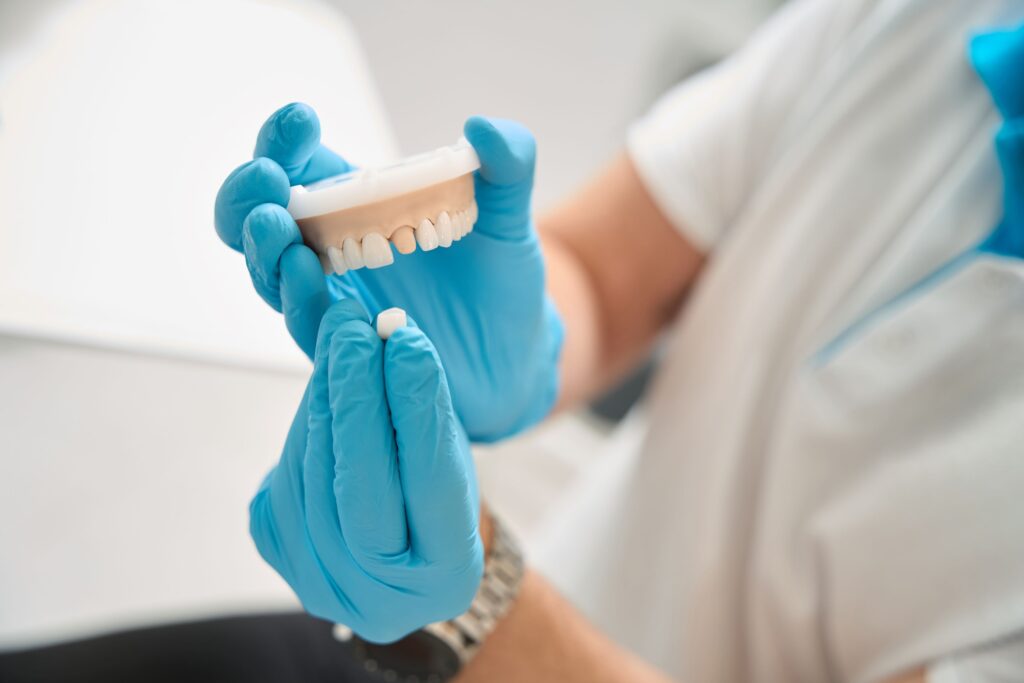
Do you have a severely decayed or damaged tooth, or are you scheduled for a root canal to relieve a toothache? If so, your dentist will likely recommend being fitted with a dental crown to protect it from additional harm while allowing you to continue using it to eat, speak, and smile normally.
Although getting a dental crown is often considered a standard procedure, you might avoid scheduling an appointment if you’re scared it might hurt. Continue reading to learn more about what to expect so you can set your fears aside!
What’s Involved in Getting a Dental Crown?
Dental crowns are tooth-shaped caps made of resilient ceramic, which can be customized to match the size, hue, and shape of your natural enamel for seamless results. They can be used for a variety of purposes, including:
- Restoring damaged teeth.
- Protecting a tooth that just underwent a root canal.
- Anchoring a dental bridge over healthy abutment teeth or implants.
- Capping a dental implant to close the space in your smile.
- Reshape stunted or worn-down teeth.
It’s worth noting that for your dentist must remove a small amount of enamel, which doesn’t regenerate, for your restoration to fit correctly.
Does Getting a Dental Crown Hurt?
You might worry that getting a dental crown will hurt, but thankfully, that’s not usually the case. For starters, your dentist will likely apply a local anesthetic to prevent discomfort when thinning your enamel, so you might feel pressure while they work, but not pain. Many providers also offer sedatives, such as nitrous oxide (laughing gas), to help you feel calm and comfortable throughout your treatment.
Then, it’s normal to develop temporary sensitivity after your tooth has been reshaped. This usually resolves within a few days and can often be safely managed with over-the-counter pain medications. Then, cementing the crown in place is a straightforward process that doesn’t usually cause aches,
How Can I Avoid Potential Discomfort from a Dental Crown?
It’s natural to feel tender after your tooth has been thinned for a dental crown to fit. If you’re feeling sore, you might want to avoid overly hard, crunchy, acidic, sugary, hot, or spicy foods that can trigger additional irritation. You can also rinse your mouth with salt water to naturally disinfect it while alleviating any associated aches.
If you experience persistent or severe pain after dental crown placement, it’s time to contact your dental office to ensure your restoration fits and functions as intended!
Meet the Author
Dr. Alejandro Lamas enjoys helping patients enhance their daily lives by improving their oral health. He earned his Doctor of Dental Medicine from Tufts University School of Dental Medicine, and today, remains committed to continuing education to stay current with contemporary technology and treatments. He offers a comprehensive menu of services, including dental crowns and nitrous oxide sedation, to help meet your needs under one roof. You can request an appointment on the website or by calling (754) 701-0386.